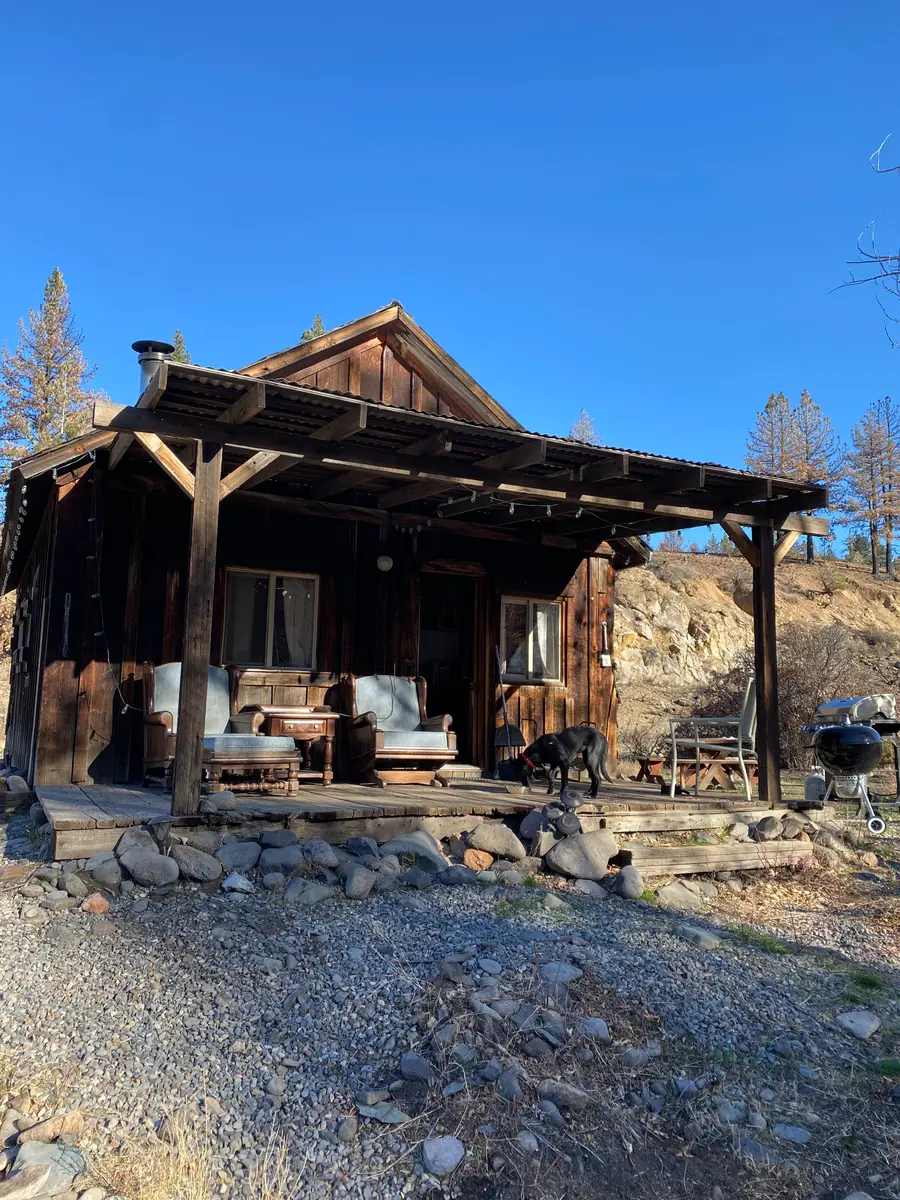
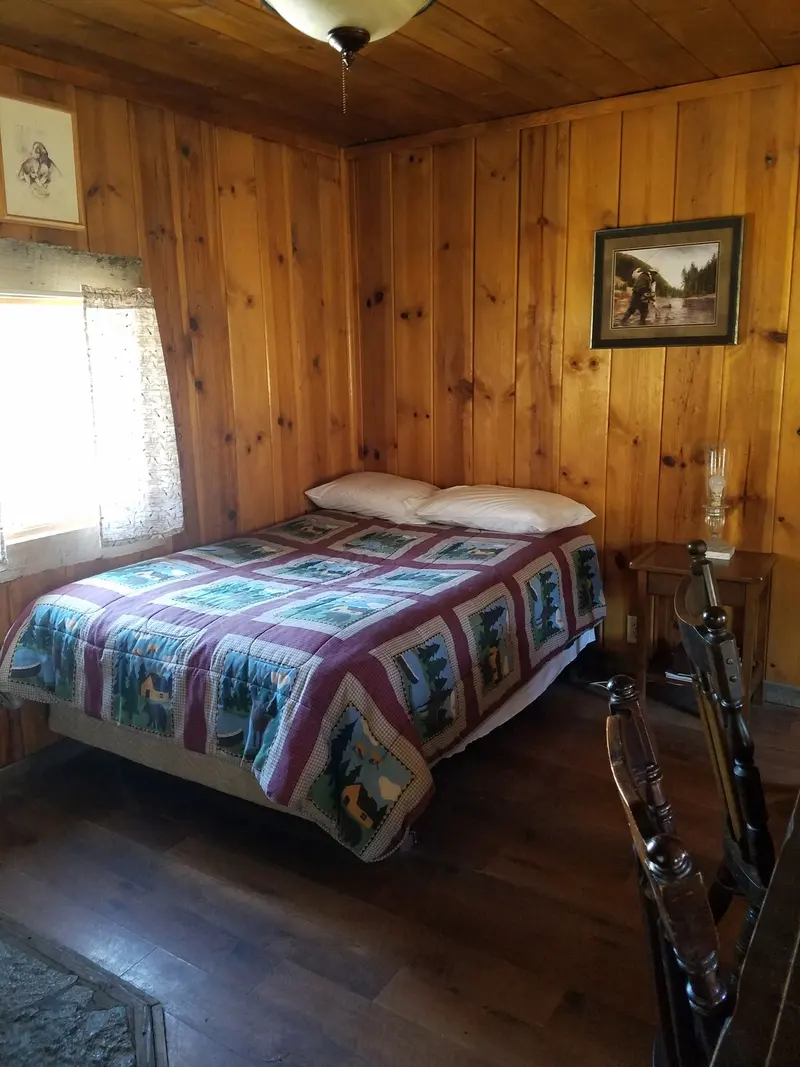
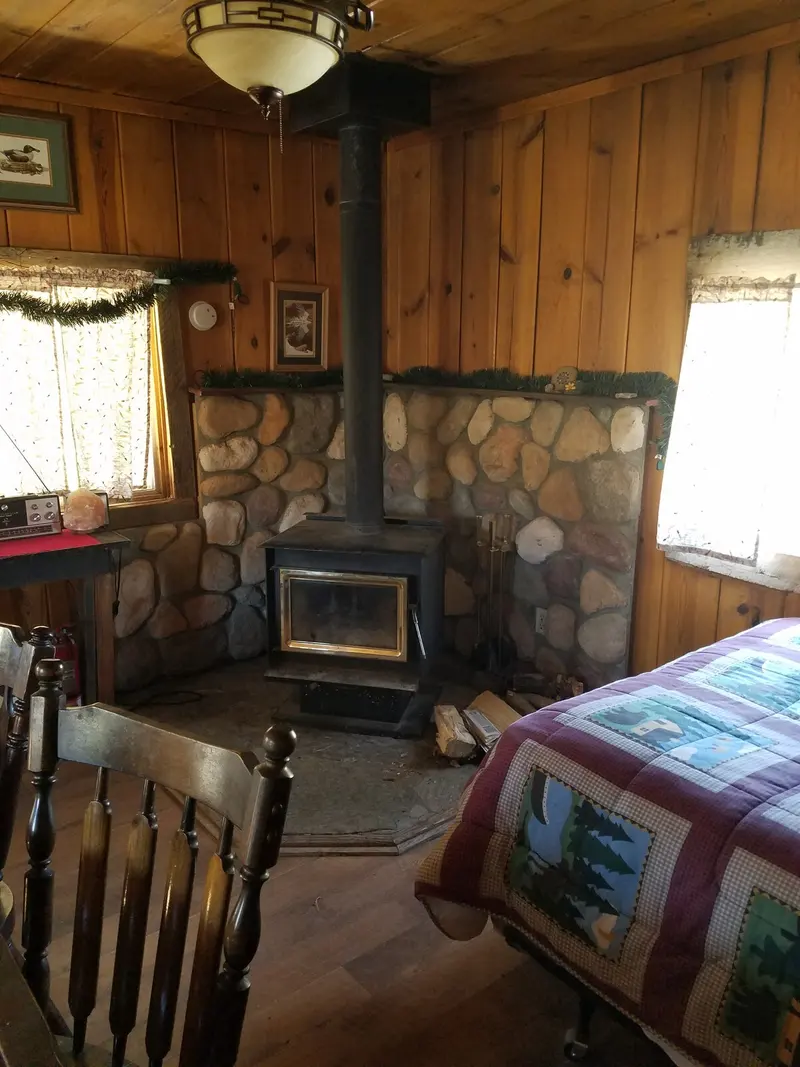
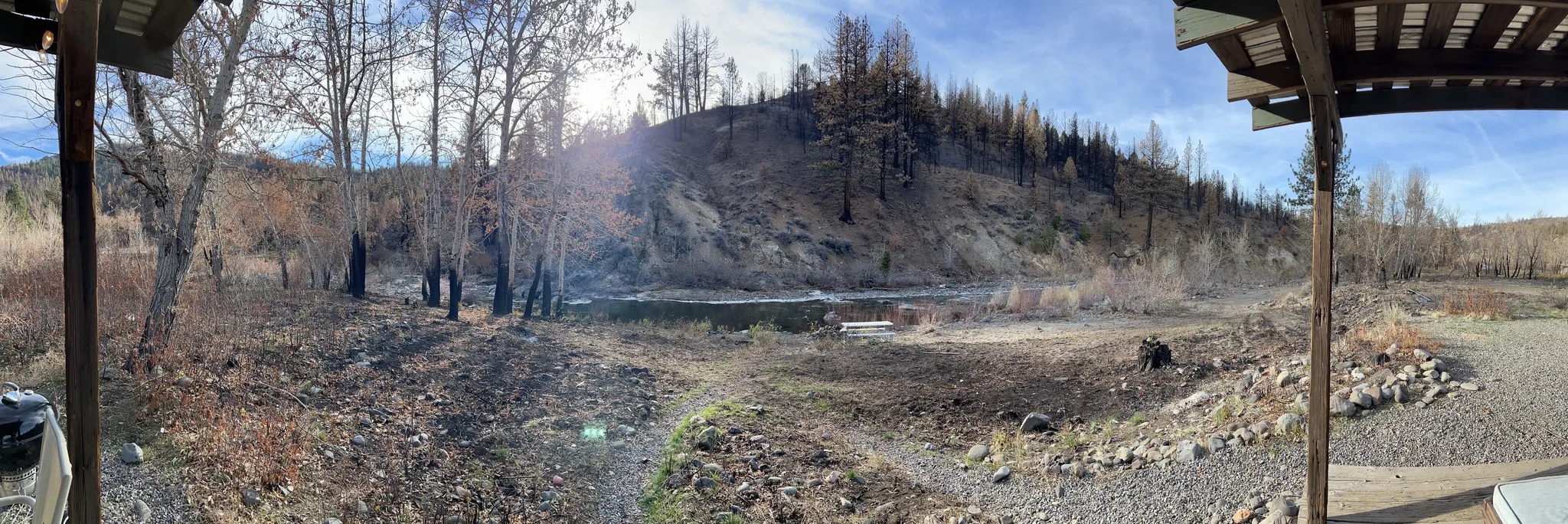
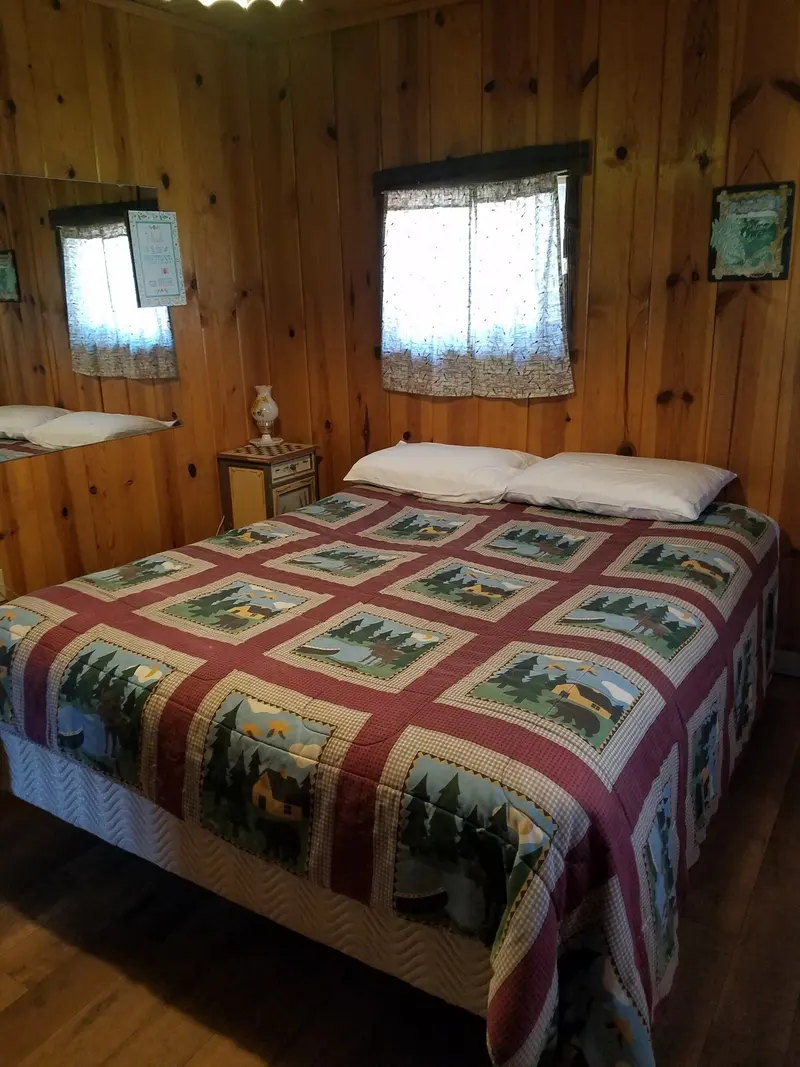
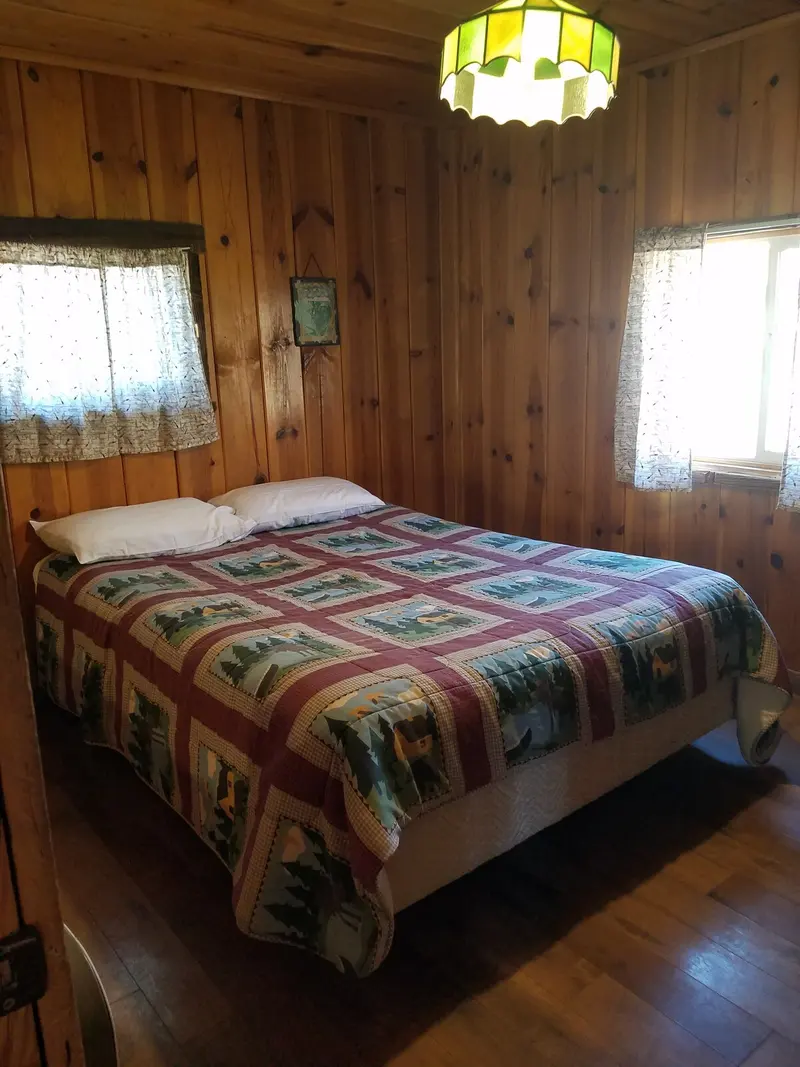
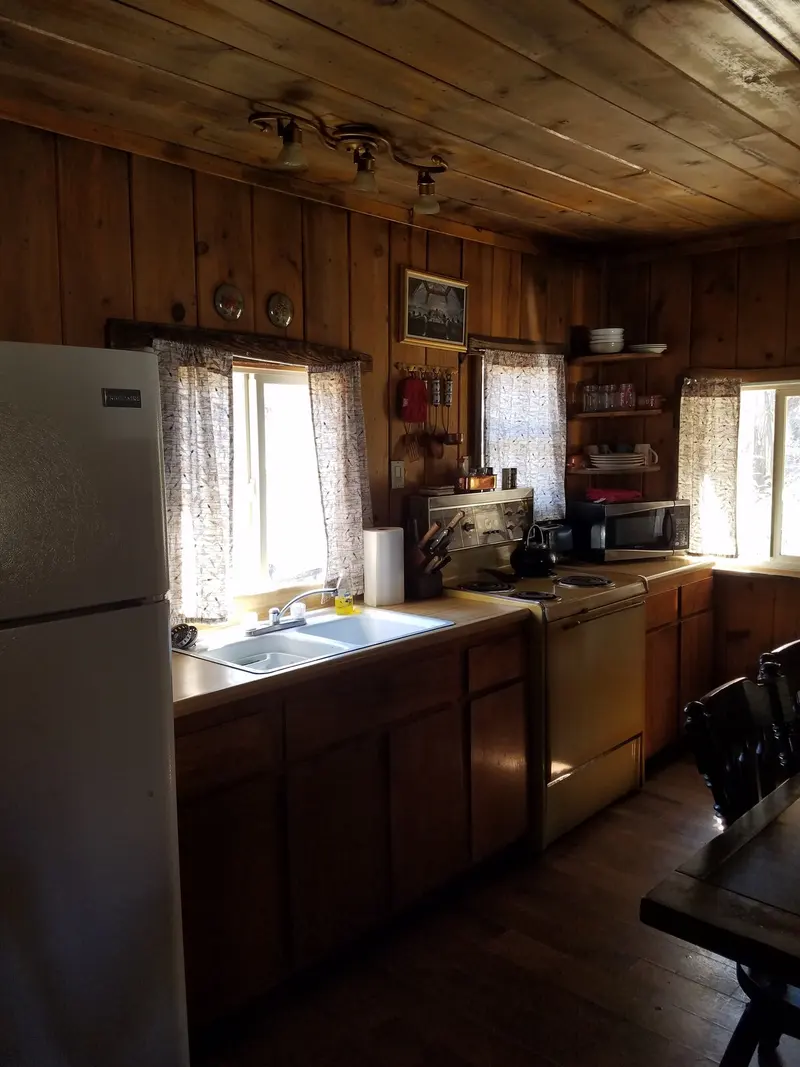
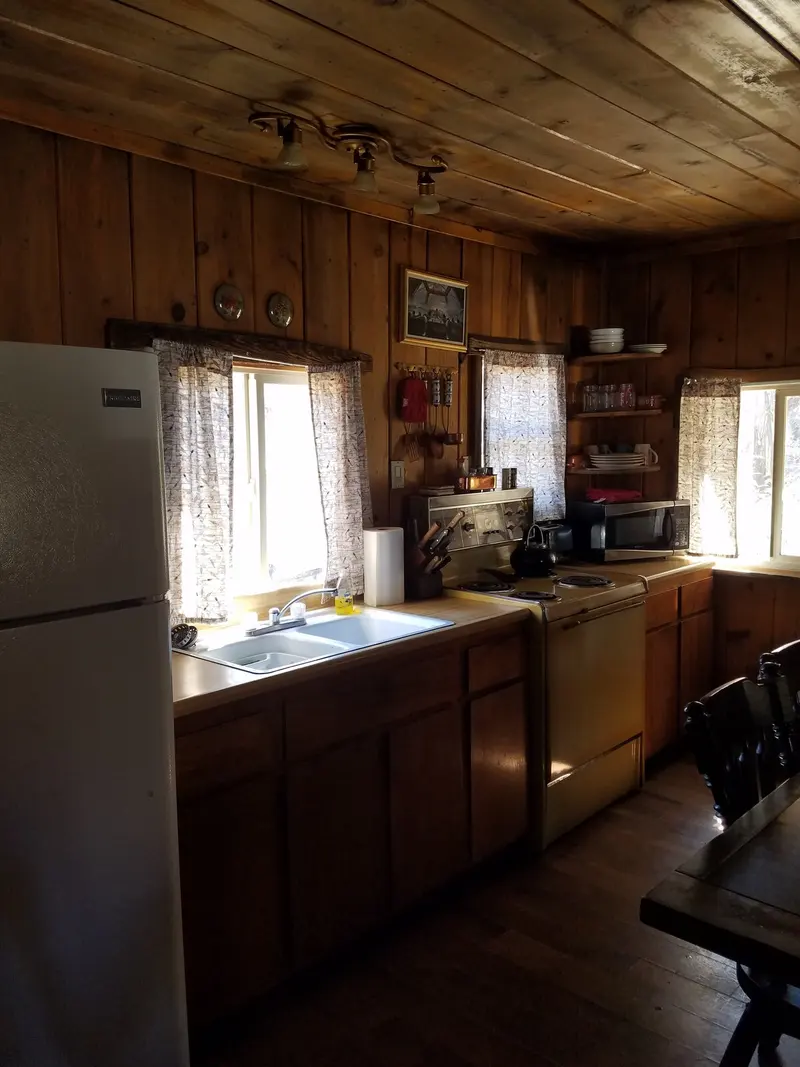
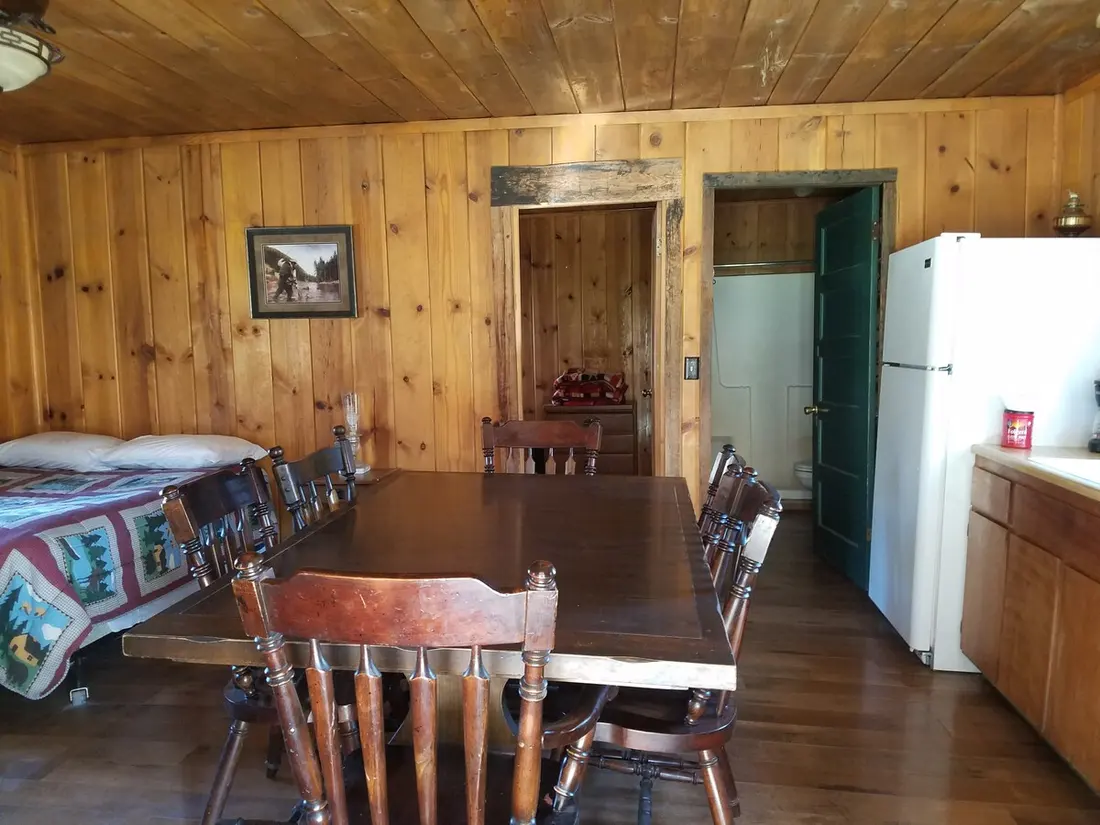
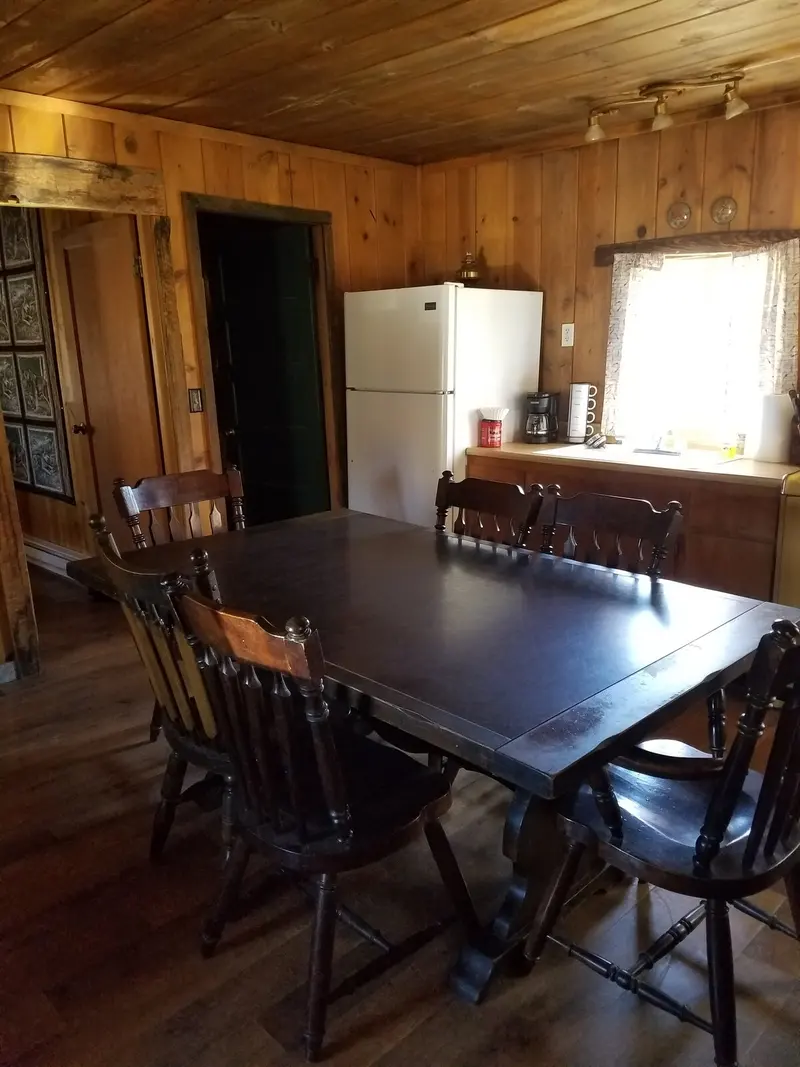
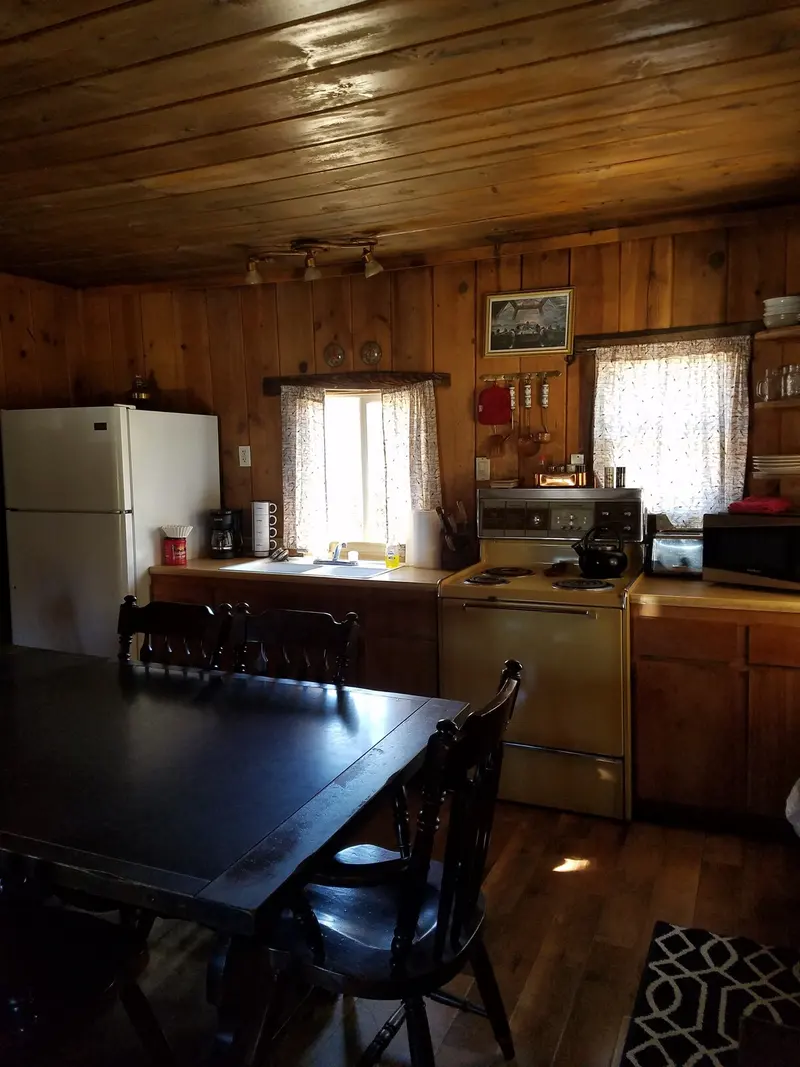
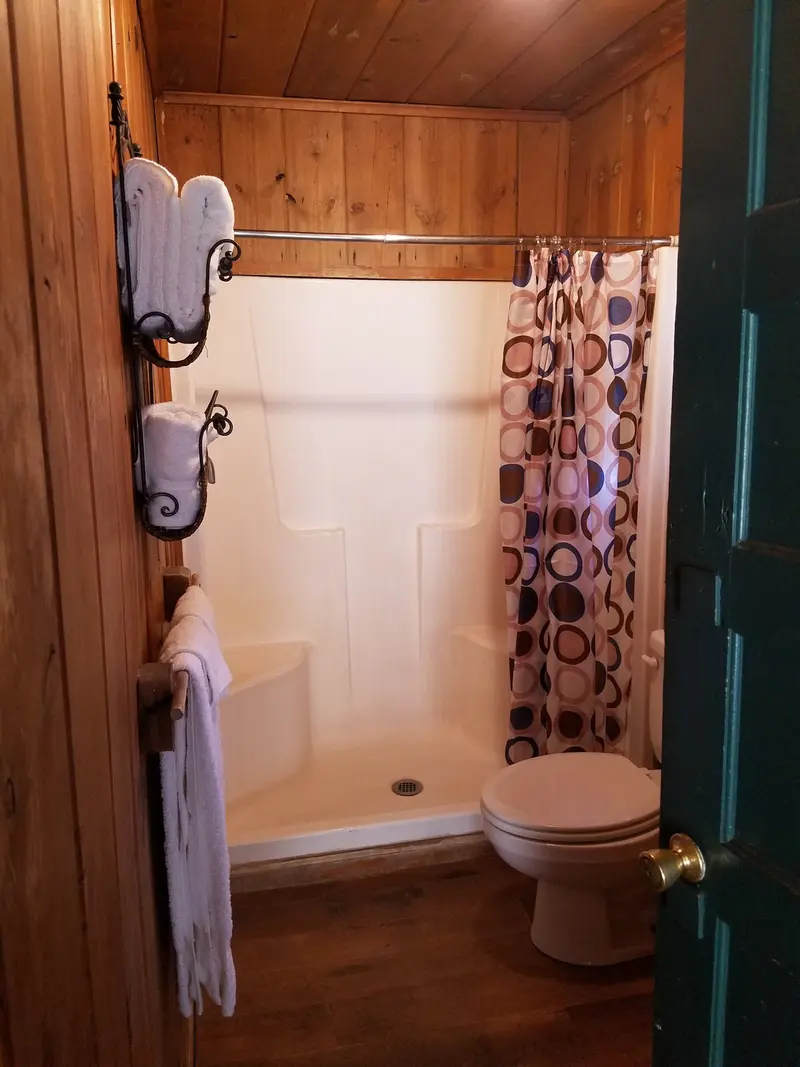
The one cabin with a bedroom of its own: a queen behind a door, a full bed in the main room, a full-size stove and oven, a wood stove for the cold end of the year, and a covered porch out over the East Fork. There is a charcoal grill on the patio and a firepit down at the water. The building came down from Monitor Pass in the early 1900s — who moved it, and exactly when, nobody wrote down — and it has stood beside this river ever since.
Start with the building itself, because it is older than every story on this
page. Phil's own account: №7 came down from Monitor Pass in the early
1900s and was placed where it stands — no record survives of who moved it or
the exact year. Buildings traveled in this county; Markleeville's old log
jail came down the mountain the same way.
The plainest name on the row belongs to the era that made this a fishing
resort. The Whitneys — a family of four — bought the place in 1946 and ran it
the way you did then: as hunting, fishing, and packing guides, driving to
central Nevada to bring back wild horses and training them, mostly, as pack
animals. They added a gas station. They ordered four kit cabins out of the
Sears & Roebuck catalog and put them up beside the river.
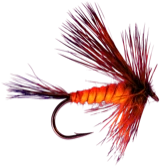
And they kept chickens — exotic ones, chosen for their feathers, which
supplied the family's fly-tying cabin. A fly called the "Carson King"
became locally famous on this water, and its dressing was recovered from a
printed shop list: peacock herl body, brown neck hackle, a golden pheasant
tippet tail, no wing. Its twin, the Carson Queen, is the same fly
with yellow floss where the herl goes.
A fire in 1947, then ice-jam high water, then the floods of 1950 drove the
Whitneys back to Sacramento. The cabins and the river stayed.
Fish the water this cabin is named for: the stocked family stretch is out the
door, and the famous special-regulation canyon water starts a mile
downstream, below Hangman's Bridge. The century of stories is in A Century at
Carson River Resort, in The Story.
The essentials- On the East Fork
- Dogs welcome
- Open year-round
- Full kitchen — full fridge, full-size stove and oven, microwave, coffee pot, toaster, pots, pans and utensils · wood stove in the main room, electric baseboard heat in the bedroom, fan for summer · front patio, charcoal grill, and a firepit down by the river · room for an extra tent ($10 for the stay)
Stated plainly- Zero cell reception
- Free Wi-Fi at the resort
Dog fee — $30 for the visit, declared at booking, priced in the receiptCheck‑in 2pm · Check‑out 11amNo limit on how many dogs, or how bigSleeps 4 · 1 bedroom · 2 beds (1 queen, 1 full) · 1 bathThe plain terms.
Deposit & balance — tonight’s deposit is half the lodging, plus Alpine County’s tax on that half; the balance is charged automatically about a week before arrival, to the same card.
Dogs — $30 for the whole visit, declared at booking. Dogs camp free at the riverside sites.
Times — check-in from 2pm, check-out by 11am. Campsites and RV slots turn over at noon.
Cancellation — Cancelling: a $25 cancellation fee applies to any cancelled reservation, and the rest of what you paid goes back to the card it came from — or keep the whole of it as an open credit toward a future stay, with no fee. Either way, call (530) 694-2229 and talk to us — we are a family resort and we would rather hear from you than not.