
What lives in each stretch, and how anyone knows
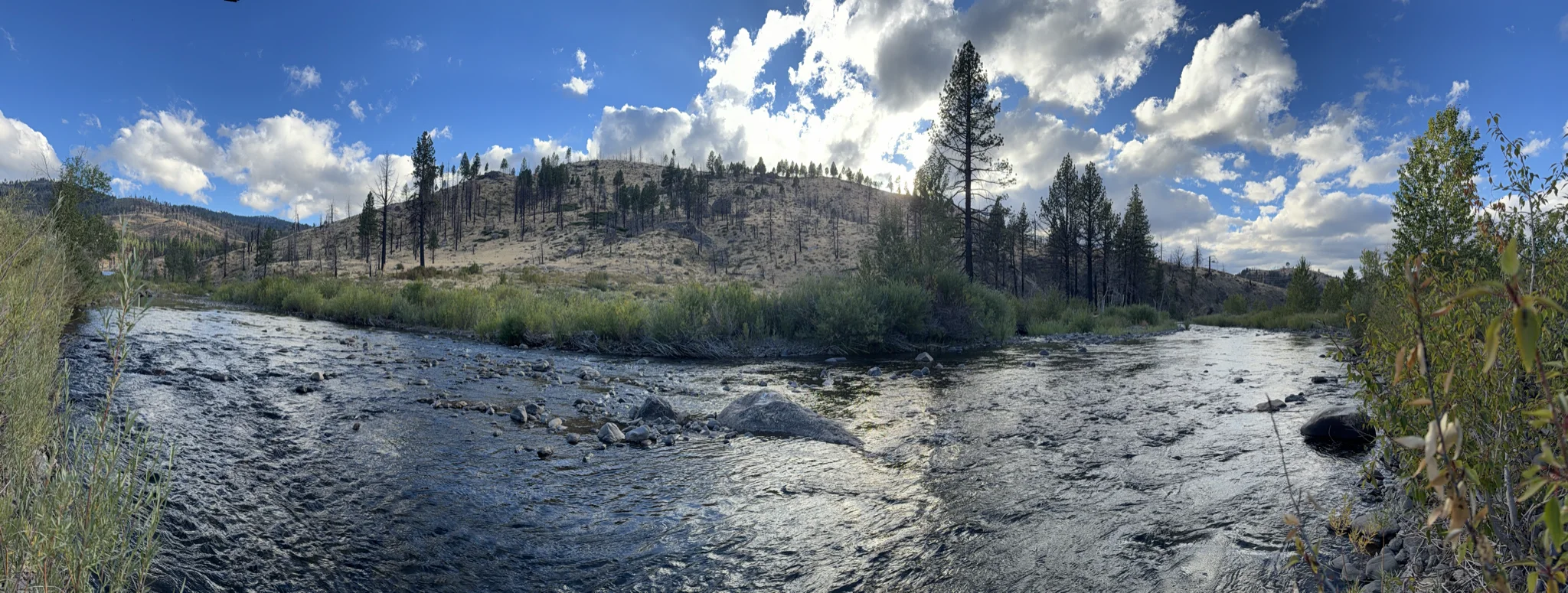
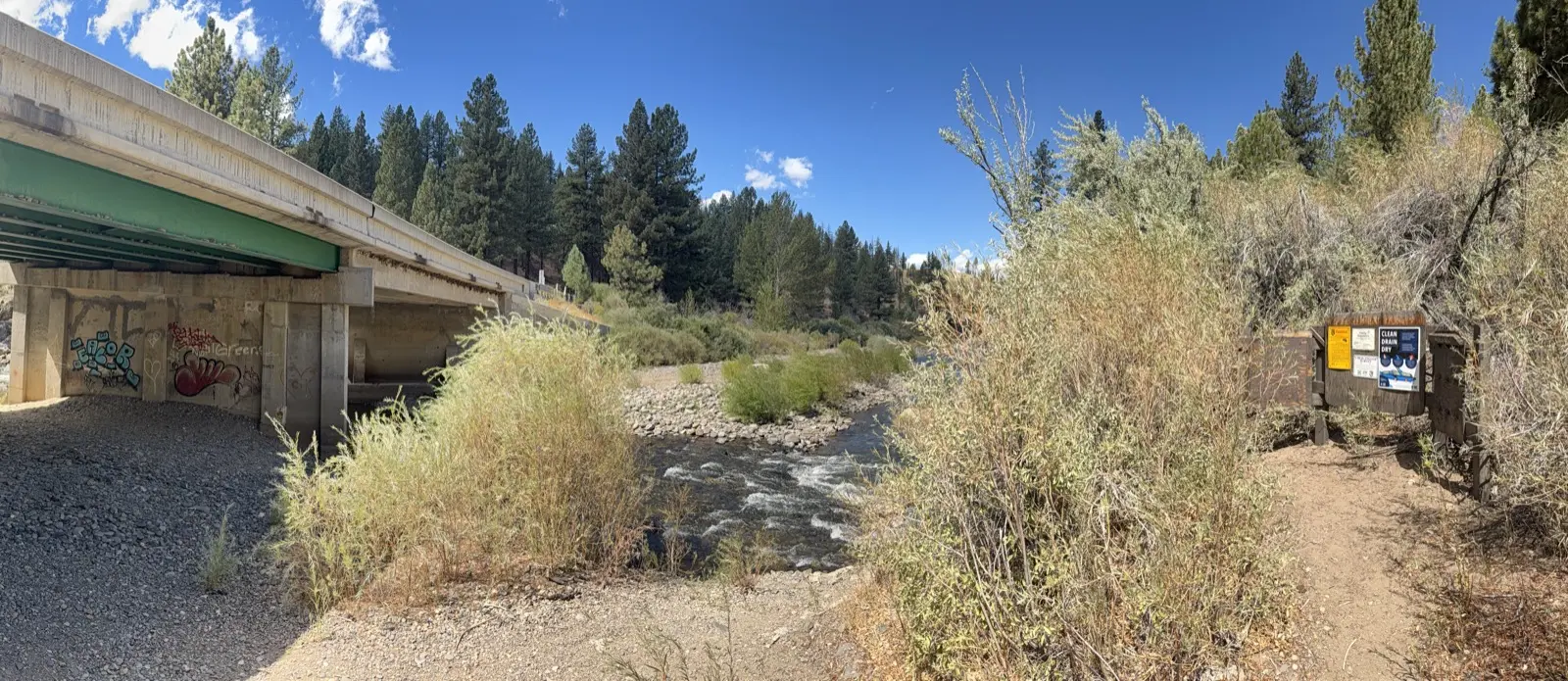
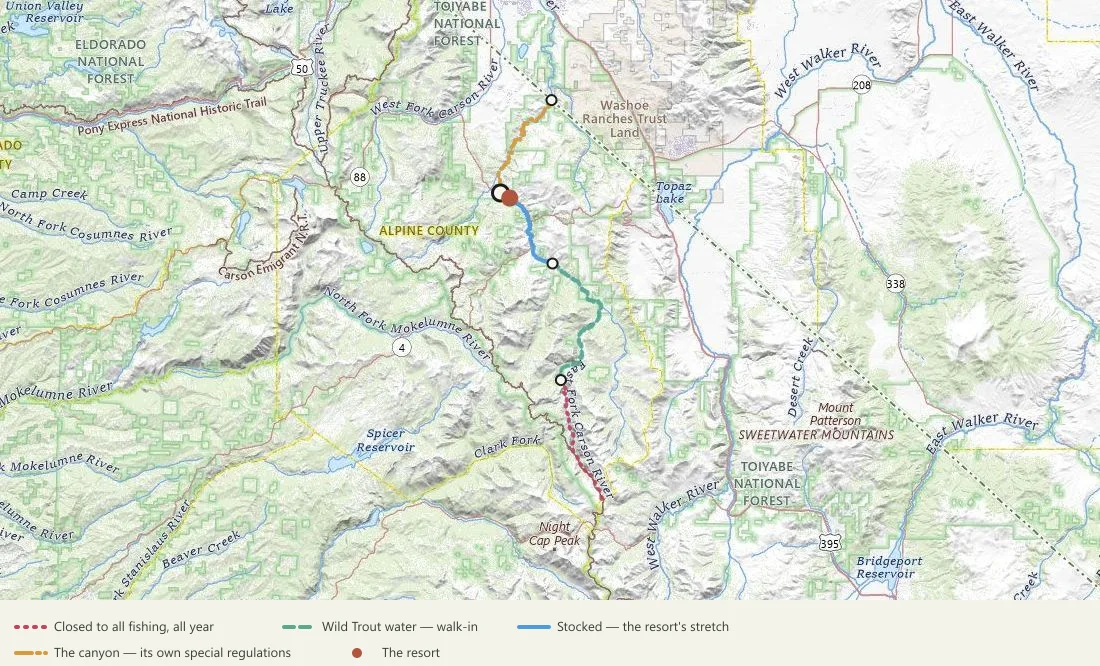
The bridge a mile below the resort is a real line: above it the state plants fish, below it nothing does. What follows is what the record actually shows — mostly CDFW's own surveys of this river — including the parts where the honest answer is that nobody has measured it.
Are the fish stocked or wild?
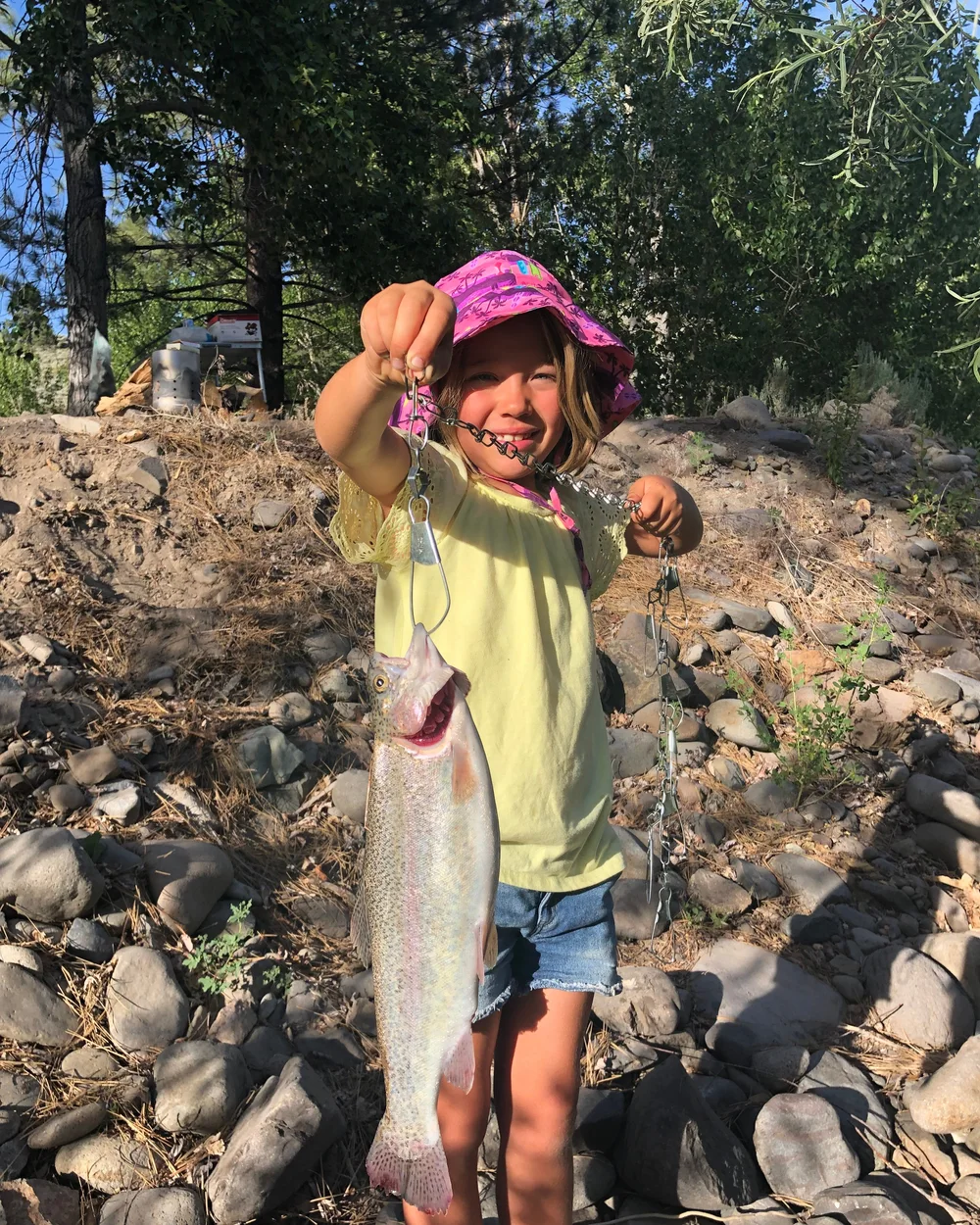
Both, and it depends which side of the bridge you're standing on. The resort's stretch is a put-and-take fishery: CDFW plants catchable rainbows and super-catchable Lahontan cutthroat from the Heenan Lake broodstock, May through October, and Alpine County buys larger trout from private hatcheries to supplement them. Below the bridge nothing is planted at all. CDFW's own words for the canyon are that angling success there "is heavily reliant on the wild trout population in that section. To a lesser extent, it is also affected by CDFW and Alpine County stocking that occurs above Hangman's Bridge."
How do hatchery fish end up in water nobody stocks?
They swim, and the current helps. CDFW expects that "the section immediately below Hangman's Bridge likely receives some of the larger hatchery fish that are stocked upstream." No one has measured how far down they get on this river. Studies on other streams find that most stocked rainbows stay within a mile or two of where the truck put them, and that when they do move, they move downstream. So the mix is real, it is heaviest just below the bridge, and it thins as you walk.
What CDFW found when it looked
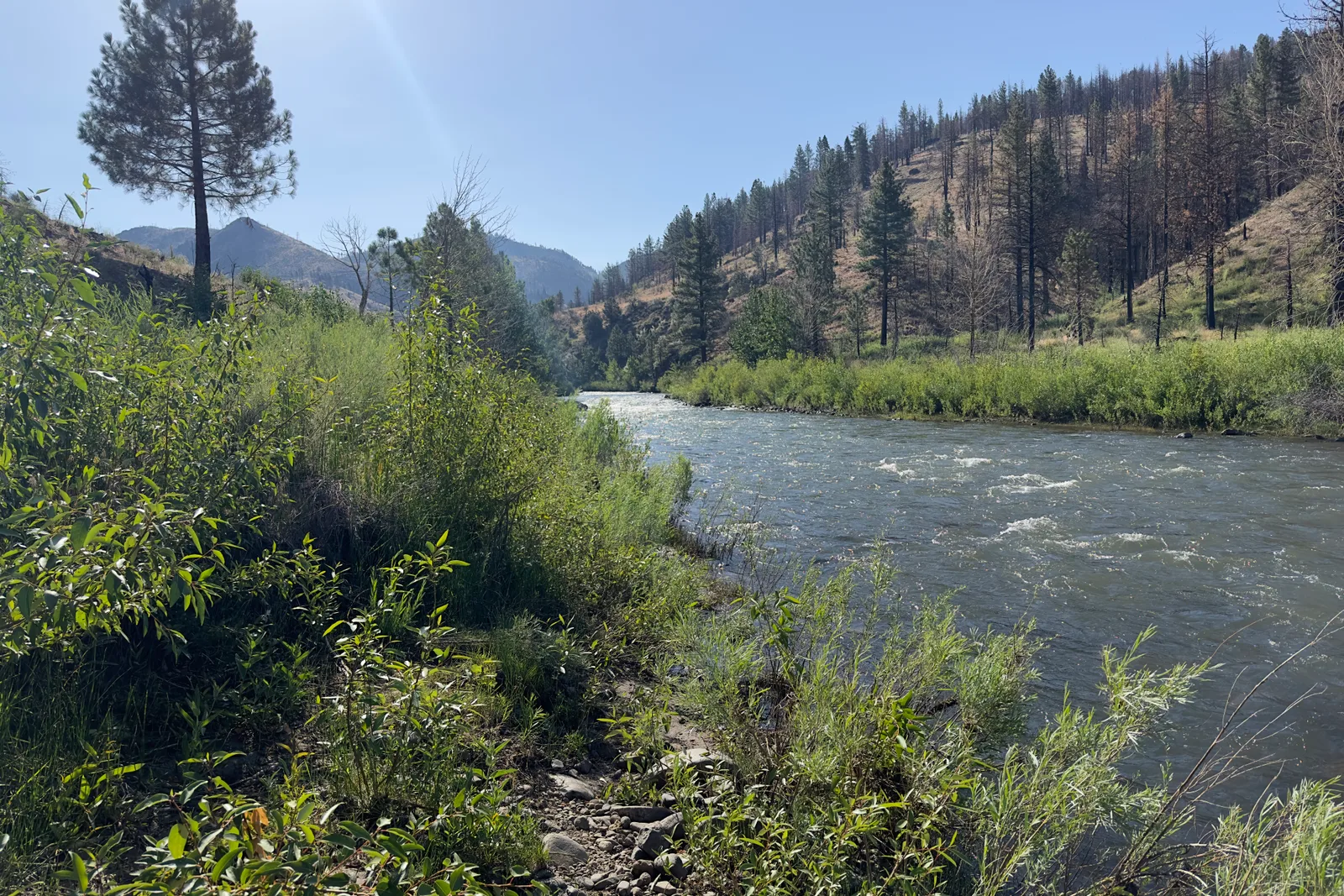
On September 11, 2019, a CDFW biologist snorkelled about two-thirds of a mile below Hangman's Bridge in 48-degree water and counted 154 fish: 130 rainbow trout, 13 mountain whitefish, 6 suckers, 3 sculpin and 2 brown trout. The report's finding: "None of the trout observed during the survey appeared to be of hatchery origin." The range of sizes told the biologist the fish are spawning and rearing right there — brown trout haven't been stocked in this river in more than twenty-five years. One transect on one day is not a census, and CDFW concedes its field test cannot tell a well-recovered hatchery fish from a wild one.
Why the 14-inch minimum is not what it looks like
It reads like a rule for growing big fish. It is the opposite: a sorting rule. CDFW wrote that the minimum was "made to allow take of hatchery fish, which are likely to be over 14 in., but protect many of the wild trout, which are generally under 14 in." The canyon's rules also got looser, not stricter — from 1992, when the Commission made it a catch-and-release area, until 2021 this water was zero-kill on barbless hooks, and the 2021 overhaul opened it to two fish over fourteen inches. In practice almost nobody keeps anything: anglers reported releasing every fish they caught in 2022.
What counts as native here
Native means Lahontan cutthroat and mountain whitefish — the fish that were here first. The wild rainbows and browns in the canyon are naturalised descendants of plants made long ago; they are river-born, which is what "wild" means, but they are not native. The 2019 snorkel found no Lahontan cutthroat at all, and the big cutthroat anglers do catch below the bridge are Heenan Lake broodstock that came down from above: a native species of hatchery origin. The river's own original cutthroat survive upstream of Carson Falls, in water closed to all fishing.
What the fishing is actually like
Modest, and steady. Over twenty-six years of angler surveys in the canyon the average is 3.76 fish per angler and 0.91 fish per hour; in 2022 it was 4.39 and 1.04. The most common rainbow reported that year measured six to eight inches. This is not a trophy fishery and the record does not pretend otherwise — it is a roadless river full of small wild trout, with the occasional larger fish that started life in a hatchery truck.
Everything above comes from CDFW's own East Fork Carson River reports — the 2019 snorkel survey and the 2022 angler survey box analysis — the codified regulations, and the 2026 provisional stocking document. Where nobody has measured something, this page says so.