

Carson River Resort · Welcome Flat, Alpine County, CaliforniaEst. 1920Road & river conditions
East Fork Carson River

Fishing History

The record, back to 1864.

The comeback from extinction, the Carson King fly, the Fourth of July weigh-in, and the planting ledger's old pages back to 1864. The working tools — regulations, live flow, recent plants, alerts — stay on the Fishing page.

The Story

The comeback from extinction

The Lahontan cutthroat is the largest cutthroat trout in the world, and it is native to this river. A 41-pound world record came out of Pyramid Lake in 1925, and railcars of iced fish shipped to San Francisco. Then Derby Dam blocked the spawning runs, the fishery collapsed, and by the early 1940s the giant strain was declared extinct.

In 1977 a biologist found its descendants surviving in a desert creek a person can step across, on Pilot Peak at the Nevada–Utah line. Eggs reached the Lahontan hatchery in 1995; DNA from century-old museum specimens confirmed the match; and in 2006 the strain came home to Pyramid Lake with the Pyramid Lake Paiute Tribe.

Illustrative field-journal plate of a Lahontan cutthroat trout with a crimson slash under its jaw.
The native troutA Lahontan cutthroat in the field-journal manner — the red slash under the jaw is the mark the fish is named for.

The rarer cousin is closer to home. The Paiute cutthroat's entire native range is eleven miles of Silver King Creek, upstream of the resort in the Carson-Iceberg Wilderness. A Basque herder carrying surplus fish over a waterfall around 1912 saved the pure strain by accident; on September 18, 2019, biologists carried its descendants back down by mule, returning the fish to its historic range for the first time in about a century.

The comeback ends in the water in front of the cabins: the Lahontan cutthroat stocked in the East Fork today are raised from the Heenan Lake broodstock, six miles up the Monitor Pass road.

Dec 1, 1925John Skimmerhorn's 41-pound world record at Pyramid Lake — still the record
Early 1940sThe original Pyramid Lake strain declared extinct
1977Rediscovered surviving in a trickle on Pilot Peak
2006Restocked in Pyramid Lake with the Pyramid Lake Paiute Tribe
Oct 5, 2023A 31-lb 4-oz cutthroat caught and released — the giants are back

The full story — including the sheepherders and the mule train — is in The Trout That Came Back.

House pattern

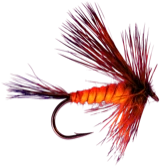
The “Carson King” fly

A dry fly named for this water, with a twin called the Carson Queen, sold at the Markleeville tackle shop and printed once — in 1978, in a book nobody had thought to open. Who tied the first one is not settled, and the record does not support the story everyone repeats. The dressings, the shop, and the line between the two are on the Carson King page.

The Carson King, in full →

Tradition

The weigh-in

Fourth of July weekend brings the fish weigh-in, live bands and barbecue. It is the resort's own tradition, held every year at this bend of the river.

Illustrative engraved specimen plate of a rainbow trout with a pink lateral band and rose gill plate, facing left on aged parchment.
The everyday fishA rainbow trout in the specimen manner. When the native cutthroat collapsed, the hatchery rainbow became the working fish of California's stocked waters — it is the fish most of the planting record below describes, and what most anglers catch out front today.
From the Planting Ledger

The old pages

The planting record’s curated entries, 1864 onward — each with its citation. The operator’s numbers — live flow, plant recency, the dated register of recent plants, alerts — stay on the Fishing page.

The old pages · curated, each with its source
1983 · 1984 · 1999

Wild trout water, open to angling, heritage water

Heenan Lake is designated a wild trout water (1983), opened to regulated angling (1984), and named a heritage trout water (1999) — the season the alert list still reminds people about every September.

Source — Heenan Lake Fishery Management Plan (CDFW)

August 11, 1983

178 Paiute cutthroat into Heenan

178 Paiute cutthroat from Coyote Valley Creek were stocked into Heenan Lake. The transfer did not persist — the last one was seen in 1989.

Source — Heenan Lake Fishery Management Plan (CDFW)

1975

4,995 yearlings, marked and counted

4,995 Independence-strain Lahontan cutthroat yearlings were marked and stocked at Heenan Lake — a dated event with an actual count, a rarity on this ledger; the modern feed publishes no counts at all.

Source — Heenan Lake Fishery Management Plan (CDFW)

1938

The Department's stocking records begin

Department stocking records for the Lahontan cutthroat extend back to 1938 — the earliest year for which official plant records exist. The ledger's old pages before this line rest on published citations, not stocking ledgers.

Source — Heenan Lake Fishery Management Plan (CDFW)

1935

First stocking of Heenan Lake

The first recorded plant in the new lake.

Source — Heenan Lake Fishery Management Plan (CDFW), citing Calhoun 1942

1929

Heenan Lake reservoir built

The reservoir that would become California's Lahontan cutthroat broodstock lake goes in, six miles up the Monitor Pass road.

Source — Heenan Lake Fishery Management Plan (CDFW)

1906

The strain's origin documented on the West Fork

The origin of the Heenan broodstock strain is documented in the West Fork Carson at Hope Valley — the same water the ledger's modern rows still record.

Source — Heenan Lake Fishery Management Plan (CDFW), citing Evermann 1906

1864

Heenan-strain cutthroat into Blue Lake

The earliest planting on the ledger: Lahontan cutthroat of the strain later kept at Heenan Lake were stocked into Blue Lake — while the Civil War was still on.

Citation chain — Heenan Lake Fishery Management Plan (CDFW), citing Behnke & Zarn 1976

One more old page is waiting: Alpine County once raised its own fish, minutes from this bend. That story joins the ledger when its primary record has been read — it’s on the September list.

A mile of trout water
Stocked out front · Wild below the bridge